
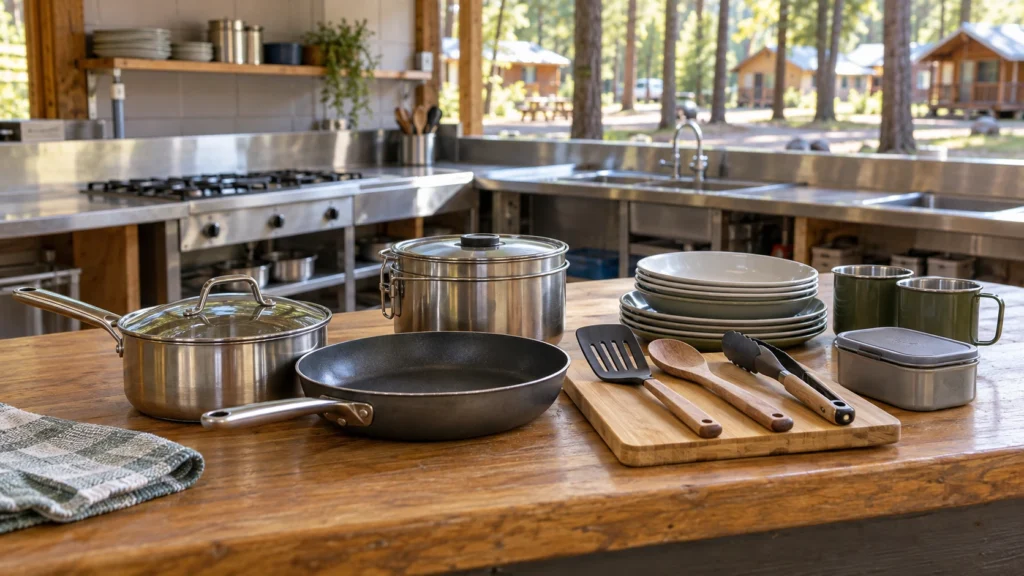
Choosing cookware for shared camping cooking facilities starts with a practical question: what can you carry, use comfortably alongside other guests, and clean before the next person needs the space? The right pieces depend on your meals, your group size, and the equipment available at the campsite.
Check the kitchen before packing
Shared kitchens vary. Some have ovens, while others offer different cooking equipment or limited preparation space. Check what your campsite provides, whether you need to bring pans and utensils, and when the kitchen is open. A campsite may welcome guests throughout the year while opening its guest kitchen only during the summer school holiday, so seasonal access matters when planning meals outside that period.
Find out whether you will cook on an electric hob, another type of burner, or both. If induction is possible, cookware must have a compatible magnetic base; an induction symbol on the pan or a magnet that holds firmly to its base can help you check. Oven access raises a separate question: a pan is oven-safe only if its body, handles, lid, and any coating can tolerate the intended temperature. Follow the manufacturer’s guidance rather than assuming that a metal-looking pan can go into the oven.
If the details are unclear, plan meals that can be made with a saucepan and frying pan on a standard hob, then adjust once you know the setup.
Build a kit around the meals you will actually cook
Start with two or three likely dinners and a typical breakfast. Pasta with a simple sauce calls for a pot and perhaps a small pan; eggs and sandwiches may need only a frying pan. Choosing meals first makes it easier to see which cookware earns its place in your luggage.
For many campers, a useful starting kit is:
- A medium saucepan with a lid for porridge, rice, pasta, soup, or reheating food. A lid helps with simmering and keeps the cooking area tidier.
- A frying pan for eggs, vegetables, or foods that need a broad cooking surface. Choose a size you can handle easily at a shared hob.
- A heat-safe stirring utensil and a serving spoon suited to the pan surfaces. Wooden, silicone, or other appropriate utensils can help protect a non-stick coating.
- A colander or practical draining method if pasta is on the menu. Check that any lid you intend to drain through fits securely before relying on it.
Resist choosing an oversized pan solely because it can serve a crowd: it may be awkward to wash in a small sink and inconvenient to store between meals.
Compare materials by how you will use them
Stainless steel is a versatile choice for shared kitchens. It tolerates regular washing and works well for boiling and simmering, although food can stick when frying if heat and oil are poorly managed. Some stainless steel pans work on induction, but compatibility depends on the base.
Non-stick pans are convenient for eggs and delicate foods and usually need less scrubbing. Their coating needs gentler utensils and cleaning, however, and they are a less appealing choice if the pan will be packed loose among hard objects. If you bring one, protect its cooking surface in transit and avoid heating it beyond the manufacturer’s instructions.
Cast iron retains heat and can be useful for particular dishes, but its weight and care requirements make it less convenient for a short stay with a walk to the guest kitchen. Lightweight camping pots are easier to carry, yet very thin ones may heat unevenly on a powerful indoor hob. A stable, flat base and handles that feel secure are often more useful than the lowest possible weight.
Make sharing the space easier
A modest kit occupies less counter and sink space, and simple dishes keep hob time manageable when several people want to cook. Bring a clean container or bag for carrying utensils and ingredients together so you can move in and out without repeated trips.
Imagine arriving to make a quick pasta dinner while another family is using part of the kitchen. A pot for the pasta and a small pan for the sauce let you work in a limited area. A sprawling recipe that needs several burners, a baking tray, and extensive chopping could leave you waiting for space and create more washing up. In that situation, the simpler meal is easier for everyone.
Keep raw ingredients and ready-to-eat food separate, and use clean utensils and surfaces as you would in any kitchen. Wash, dry, and put away your own cookware promptly. If the campsite provides shared items, follow its instructions for where they belong rather than assuming they can be taken back to your pitch.
For more detailed information on this topic, read our guide on Playground Access or Cabin Accommodation for Rainy Days?
Pack for cleaning and storage, too
A pan is only useful if you can clean and carry it easily. Pack a small amount of suitable washing-up liquid, a sponge or cloth appropriate for your cookware, and a tea towel if these are not supplied. A lidded box can keep clean utensils together and prevent damp items from soaking the rest of your gear. Let everything dry thoroughly before packing it away for a long period.
Consider where hot cookware will go after cooking. A heat-resistant mat or trivet can protect a table if the kitchen’s arrangements allow you to use it. Keep hot handles turned away from busy walkways, and carry hot food carefully when returning to a tent or caravan.
The best cookware for a shared camping kitchen is a small set matched to your menu and the facilities available during your stay. Check compatibility and opening periods, favour pieces that are easy to handle and clean, and leave enough flexibility to simplify a meal when the kitchen is busy.