
Camping creates memorable outdoor experiences, but simple errors can quickly turn an enjoyable trip into a frustrating one. Camping Mistakes often lead to damaged gear, poor sleep, safety risks, and wasted supplies. According to the Outdoor Industry Association, millions of Americans camp each year, making preparation more important than ever. We can avoid most problems through careful planning and practical habits.
Whether we are first-time campers or experienced outdoor enthusiasts, learning from common errors improves every trip. Good preparation protects our health, equipment, and the environment. This guide explains the most common Camping Mistakes, why they happen, and the practical steps we can take to prevent them while enjoying a safer and more comfortable outdoor adventure.
| Common Camping Mistake | Possible Result | Best Solution |
|---|---|---|
| Packing without a checklist | Forgotten essentials | Use a detailed packing list |
| Choosing the wrong campsite | Poor sleep and safety issues | Research the campsite beforehand |
| Ignoring weather forecasts | Wet gear or dangerous conditions | Monitor weather updates before departure |
| Poor food storage | Wildlife encounters | Store food in sealed containers |
| Overpacking | Heavy loads and fatigue | Pack only essential gear |
| Skipping gear testing | Equipment failure | Test all equipment before leaving |
Plan Your Trip Before Leaving Home
Planning is the easiest way to prevent Camping Mistakes before they happen. Many campers focus only on destinations while ignoring logistics. We recommend researching campground regulations, weather forecasts, available water sources, and emergency services. The National Park Service also advises checking local fire restrictions before every trip because regulations change throughout the year.
Create a Practical Camping Checklist
A checklist reduces forgotten items and unnecessary packing. Essential equipment includes shelter, sleeping gear, cooking supplies, lighting, navigation tools, first-aid supplies, and extra clothing. Professional outdoor instructors recommend reviewing the checklist twice before departure. This simple habit saves time and prevents many expensive Camping Mistakes that could affect the entire trip.
Choose the Right Campsite
Selecting the right campsite directly affects comfort and safety. Many Camping Mistakes begin with poor site selection. Low ground may collect rainwater, while exposed areas experience stronger winds. We should always choose level ground with natural drainage and safe distances from rivers, cliffs, and dead trees that could fall during storms.
Understand Environmental Conditions
Experienced campers evaluate shade, sunlight, wind direction, and nearby water before pitching a tent. Avoid camping directly beside lakes because insects become more active near standing water. According to Leave No Trace principles, established campsites minimize environmental damage while providing safer and more reliable locations for overnight stays.
Pack Smart Without Carrying Too Much
Overpacking remains one of the most common Camping Mistakes among beginners. Heavy backpacks increase fatigue and reduce mobility during hikes. Outdoor experts recommend packing lightweight, multipurpose equipment whenever possible. Every item should have a clear purpose, especially during backcountry camping where every pound matters.
Prioritize Essential Equipment
Focus on equipment that supports safety, shelter, hydration, nutrition, and communication. Pack extra batteries, waterproof matches, a portable water filter, and emergency blankets. Avoid duplicate items unless they serve as emergency backups. Quality equipment often performs better than several inexpensive alternatives that may fail during challenging conditions.
Prepare for Changing Weather
Weather changes quickly in many camping destinations. Ignoring forecasts leads to serious Camping Mistakes, including hypothermia, heat exhaustion, and damaged equipment. We should review updated forecasts both before departure and during longer camping trips whenever mobile service remains available.
Dress in Layers for Comfort
Layered clothing adapts to changing temperatures throughout the day. Moisture-wicking base layers, insulating mid-layers, and waterproof outer shells provide flexible protection. Cotton clothing absorbs moisture and dries slowly, making it unsuitable for cool or rainy conditions. Proper clothing significantly improves comfort during unexpected weather changes.
Store Food Safely Around Wildlife
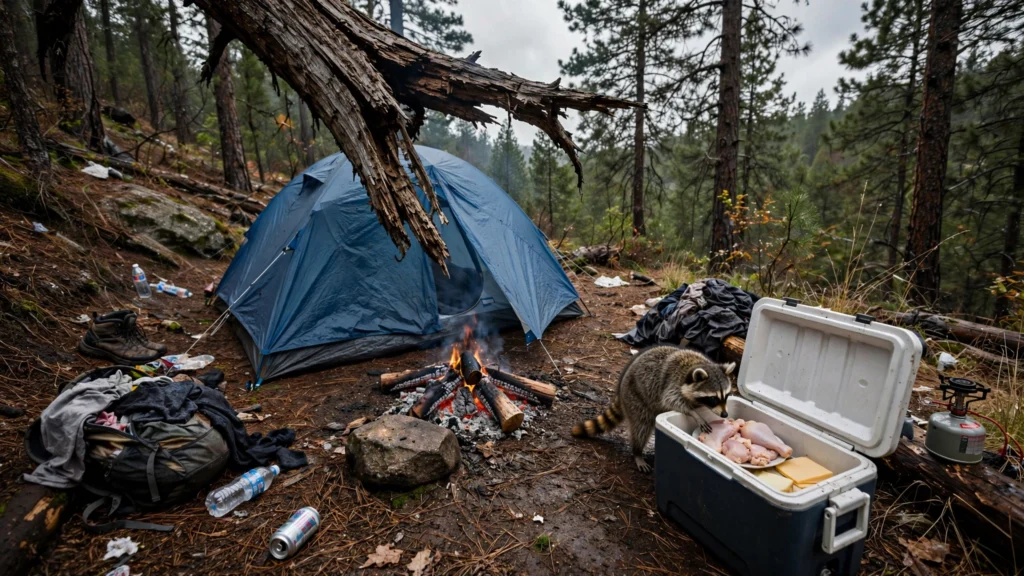
Improper food storage attracts wildlife and creates unnecessary danger. Many Camping Mistakes involve leaving snacks, coolers, or trash outside overnight. Bears, raccoons, squirrels, and other animals quickly learn to associate campsites with food, increasing risks for both campers and wildlife.
Follow Safe Food Handling Practices
Store food inside bear-resistant containers or campground storage lockers whenever available. Dispose of waste properly and clean cooking equipment immediately after meals. Avoid eating inside tents because food odors remain in fabrics. Wildlife experts consistently recommend maintaining a clean campsite to reduce animal encounters and preserve natural behavior.
Best Practices to Prevent Camping Mistakes
- Research campground rules before leaving home.
- Test tents, stoves, and lanterns before every trip.
- Pack a complete first-aid kit.
- Carry extra drinking water or purification equipment.
- Check weather forecasts daily.
- Store food securely away from sleeping areas.
- Keep emergency contacts informed about your travel plans.
- Practice Leave No Trace principles.
Test Equipment Before Your Adventure
Equipment failure creates unnecessary stress during camping trips. One overlooked source of Camping Mistakes involves using new gear without testing it first. Even premium equipment may require adjustments or practice before working efficiently in outdoor conditions. Explore our latest insights in Best Camping Activities for the Whole Family.
Practice Setting Up Camp
Set up the tent in your backyard or a local park before departure. Test camp stoves, lanterns, sleeping pads, and water filters. Replace damaged components immediately. Outdoor guides consistently emphasize that familiarity with equipment saves valuable time, especially during rain or after sunset when visibility becomes limited.
Conclusion
Avoiding Camping Mistakes starts with careful planning, smart packing, weather awareness, and responsible outdoor habits. Small improvements create safer, more enjoyable camping experiences for everyone. By preparing thoroughly, respecting nature, and testing equipment before departure, we can confidently enjoy every adventure while reducing unnecessary risks and protecting the outdoors for future campers.