
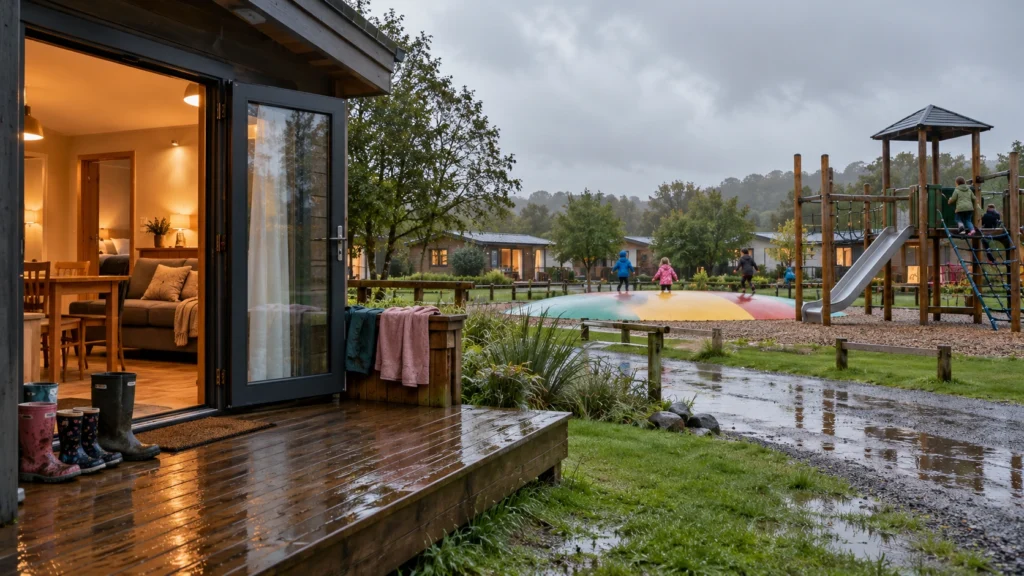
Rain can change the pace of a family camping holiday quickly. A playground may be the part children remember most, but a dry place to rest, change clothes, and spend a quiet hour matters when the weather turns. If you are weighing playground access against cabin accommodation for rainy days, start with a distinction: one is an activity you can use when conditions allow; the other gives you a more dependable base for the whole day.
What playground access offers when the forecast is uncertain
A playground gives children a reason to get outside between showers. At the campsite, the play areas include a playground, a bouncy pillow and an interactive playground with features such as a football enclosure and DJ bench. The play areas are available to guests and visitors, so using them does not necessarily require booking accommodation.
That makes playground access useful for a short visit or a camping stay with a mixed forecast. A break in the rain can be enough for children to run around, while adults can keep the outing flexible. Nearby activities such as the beach and walking trails may also suit a dry spell, though their appeal depends on the weather and your family’s plans.
The limitation is straightforward: an outdoor playground is still outdoors. Wet surfaces, steady rain, or tired children can cut a visit short. Even when play equipment is available, conditions may make a particular activity less enjoyable. Check the weather on the day and use your judgment about which areas are comfortable for your children.
What a cabin changes on a wet day
A cabin gives a family a place to return to when outdoor plans pause. It can make it easier to change out of wet clothes, take a break, and settle younger children who have had enough of the rain. For a longer holiday, that private space may matter more than any single activity, especially when several wet periods are expected.
Cabin accommodation does not replace the playground. The two serve different parts of the day: a cabin supports rest and routine, while play areas provide activity when conditions are suitable. Choosing a cabin can therefore make sense for a family that still wants to use the playground whenever the weather improves.
Before booking, look at the details of the particular cabin rather than assuming every unit has the same layout or facilities. Consider how many people need space indoors, whether your children are likely to nap during the day, and what you would want close at hand if plans change. Pack a few compact indoor activities, such as cards, colouring materials or a book, so a rainy afternoon does not depend entirely on screens.
Match the choice to the length of your visit
For a day trip, playground access may be all you need. You can watch the forecast, arrive during a promising dry period, and leave when everyone is ready. Bring spare clothes and a bag for wet items; a short shower feels less disruptive when the next change is easy.
An overnight stay asks a different question. If you are choosing between a camping pitch and a cabin, think about how your family handles several hours indoors. A caravan or other camping setup may already give you a comfortable place to wait out rain. A cabin may be more appealing if you would value a separate indoor base or prefer not to manage wet camping gear. The right answer depends on your equipment, budget and tolerance for changing plans.
Imagine arriving for a weekend with two children who are eager to play. The forecast shows scattered showers rather than continuous rain. A family with a well-equipped caravan might be happy to use the playground between showers and spend the rest of the time at their pitch. A family travelling with very little gear might find a cabin easier, even if both families expect to visit the same play areas. The useful comparison is the time between activities, not just the activities themselves.
Plan for the awkward parts of a rainy day
Rainy-day planning works best when it covers small practical needs. Wet shoes, hungry children, and uncertain timing can create more frustration than the rain itself. Before deciding what to book, consider:
- A dry change of clothes: Keep socks and a warm layer easy to reach rather than buried in luggage.
- A flexible meal plan: Check which cooking or dining options suit your stay and their current opening arrangements. Do not assume every facility is available whenever you need it.
- An indoor pause: Decide where your family can comfortably spend an hour if the rain continues.
- A shorter activity window: Treat playground time as an opportunity when conditions are good, rather than the only plan for the day.
These details also help with costs. A cabin may cost more than a camping option, but the comparison should include what your family already has: suitable shelter, bedding, cooking arrangements, and room to relax. Check the current booking terms and the specific accommodation details before making a decision, particularly if your plans might change with the forecast.
For more detailed information on this topic, read our guide on How to Create a Comfortable Sleeping Setup for a Camping Trip.
Choose the base first, then the activities
For rainy days, cabin accommodation is usually the stronger choice when your main concern is having a comfortable place to retreat. Playground access is valuable when the rain eases, especially for children who need a chance to move, but it cannot carry an entire wet-weather plan on its own. If you already have a camping setup that works well in rain, you may not need a cabin to enjoy those same breaks outdoors.
Choose the place where your family can comfortably spend the wet hours, then treat playground visits as a welcome part of the dry ones. That approach leaves room for the weather to change without making the whole trip depend on it.