
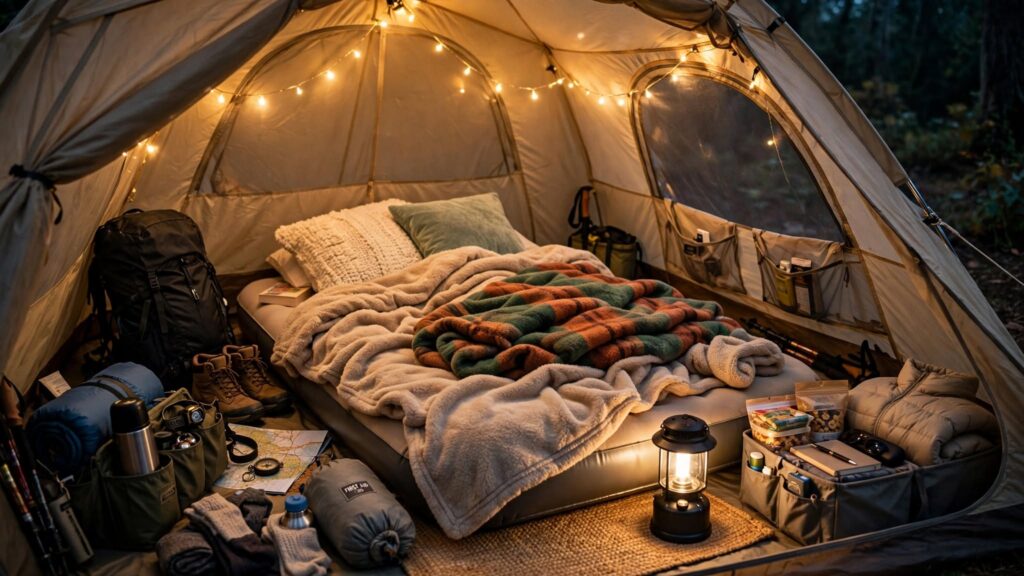
A camping trip can be relaxing during the day but surprisingly uncomfortable once it is time to sleep. Uneven ground, cold air, moisture, and an unsuitable sleeping bag can turn a peaceful night outdoors into hours of tossing and turning. A comfortable camping sleeping setup helps you rest properly so you can enjoy hiking, exploring, cooking, and other activities the next day.
Comfort does not necessarily require expensive equipment. Choosing a suitable campsite, creating enough insulation from the ground, and arranging your sleeping gear carefully can make a noticeable difference. The right setup depends on the weather, your sleeping habits, and whether you are travelling by car or carrying everything in a backpack.
Start With the Right Tent Location
A comfortable night begins before you unpack your sleeping bag. Look carefully at the ground where you plan to pitch your tent.
Choose a reasonably flat area without sharp rocks, exposed roots, deep dips, or anything else that could press against you while sleeping. A slight slope may not look important during the day, but it can cause you to slide toward one side of the tent throughout the night.
Check the area for standing water or signs that rainwater could collect there. Avoid disturbing vegetation simply to create a flatter space. When possible, use an established camping area that already provides a suitable surface.
Poor campsite selection is one of several issues covered in Common Camping Mistakes and How to Avoid Them, and getting this decision right makes the rest of your sleeping arrangement much easier.
Create a Comfortable Layer Between You and the Ground
Your sleeping bag alone is usually not enough to create a comfortable sleeping surface. A camping mat, sleeping pad, or suitable camping mattress provides cushioning while also separating your body from the cold ground.
Choose a Sleeping Pad That Fits Your Trip
Different sleeping pads suit different camping styles. Foam mats are simple, durable, and easy to use. Inflatable sleeping pads can provide greater cushioning while packing into a smaller space. Self-inflating mats combine foam and air to provide another balance between comfort and convenience.
For car camping, where weight is less important, a thicker camping mattress may be practical. Backpackers usually need something lighter and more compact.
Whatever you choose, make sure the pad is long and wide enough for your normal sleeping position. Side sleepers may appreciate additional cushioning around the shoulders and hips.
Match Your Sleeping Bag to the Conditions
A comfortable sleeping setup for camping also depends on choosing appropriate insulation for the expected weather.
Sleeping bags are designed for different temperature conditions, so check the manufacturer’s temperature information rather than choosing purely by thickness or appearance. Remember that individual comfort varies. Someone who naturally sleeps cold may need more insulation than another camper in the same conditions.
The shape also matters. Mummy-style sleeping bags fit closely around the body and help retain warmth, while rectangular bags generally provide more room to move. Your choice should reflect both the expected temperature and how you prefer to sleep.
Keep the sleeping bag dry whenever possible. Damp insulation can become uncomfortable and may provide less effective warmth.
Bring a Pillow That Actually Supports You
A pillow may seem like a minor camping accessory until you try sleeping without one. Proper head and neck support can make an outdoor sleeping arrangement feel considerably more familiar.
Camping pillows are designed to pack down small, but car campers can simply bring a regular pillow if space allows. Another option is to place soft clothing inside a clean stuff sack or pillowcase.
Avoid making an improvised pillow too firm. A tightly packed bundle of clothing can raise your head higher than your normal sleeping position and become uncomfortable during the night.
Manage Temperature Inside the Tent
Outdoor temperatures can change significantly after sunset, so prepare your sleeping area before you become cold.
Wear clean, dry sleeping clothes rather than staying in clothing that became damp from hiking or other daytime activities. Keep an extra layer nearby so you can adjust your clothing without searching through bags in the dark.
In cooler conditions, insulating yourself from the ground is especially important because the surface beneath the tent can draw heat away from your body. In warmer weather, ventilation becomes more important. Use your tent’s ventilation features where appropriate to improve airflow and reduce condensation.
Keep Essential Items Within Reach
A well-organized tent is easier to use at night. Instead of leaving equipment scattered around your sleeping area, decide where essential items will go before settling down.
A few useful items to keep accessible include:
- A headlamp or flashlight
- Water
- An extra clothing layer
- Necessary personal items
- Suitable footwear for leaving the tent
Keep sharp or bulky equipment away from your sleeping pad. This protects inflatable gear from accidental damage and gives you more room to move comfortably.
Consider Your Normal Sleeping Habits
Camping equipment works better when it matches the way you actually sleep.
If you normally sleep on your side, prioritize cushioning rather than choosing the thinnest possible mat. If you move frequently during the night, a wider pad or sleeping bag may feel less restrictive. Couples should also consider whether separate sleeping systems or a shared camping mattress will provide better comfort.
Small adjustments can help as well. Some campers prefer placing folded clothing beneath their knees when sleeping on their back, while others benefit from extra padding beneath pressure points.
Test Your Camping Sleeping Setup Before Leaving
Trying new sleeping equipment for the first time at a campsite can reveal problems when they are difficult to fix. Set up your tent, sleeping pad, sleeping bag, and pillow at home before the trip if possible.
Lie down for a while rather than simply checking whether everything physically fits. Make sure the sleeping pad stays underneath you, your sleeping bag provides enough room, and your pillow feels comfortable.
Testing inflatable equipment also gives you an opportunity to identify leaks, faulty valves, or missing accessories before travelling.
Keep the Sleeping Area Dry and Clean
Moisture, sand, dirt, and wet clothing can quickly make a tent uncomfortable. Leave muddy shoes near the entrance rather than carrying them across your sleeping area. Store wet clothing separately when possible.
Ventilation can also help control condensation inside the tent. Completely sealing every opening may feel warmer initially, but trapped moisture from breathing can collect on interior surfaces overnight.
Keeping your sleeping gear dry and your tent reasonably organized creates a more pleasant environment without adding extra equipment.
Conclusion
Creating a comfortable sleeping setup for a camping trip comes down to several practical choices working together. Start with level ground, use an appropriate sleeping pad, choose a sleeping bag for the expected conditions, and bring enough head and neck support.
Temperature control, tent organization, and keeping your equipment dry also affect how comfortable the night feels. Most importantly, choose gear that suits your own sleeping habits rather than assuming the same setup works for everyone. A little preparation before leaving home can make outdoor nights much easier and leave you better rested for the next day’s activities.